


Reinforcement of wood structure
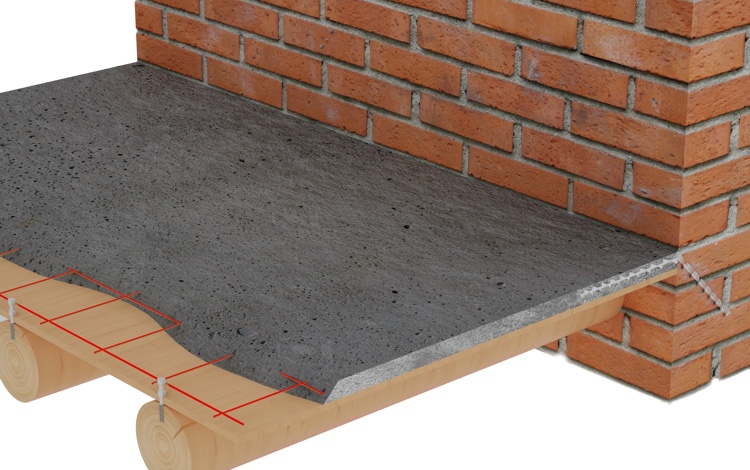
The structured wood is one of the best building materials suitable for carrying out supporting functions for an indefinite time, and it has a long applicative history proved by the high durability of the properly designed and implemented structures. In most Italian cities there are numerous examples of buildings with secular wooden roofs and floors, yet perfectly efficient thanks to the only routine maintenance. The primary requirement that, in recent years, has led to a more and more intense experimentation in the field of FRP-wood composite structures, was therefore to give greater strength and stiffness to the structural elements in solid wood or glued laminated wood. Compared to the benefits that the wood itself is able to offer, the fibre reinforced composite materials have some obvious benefits, because they are optimal for applications of simple construction and extreme versatility both for the recovery of the existing elements and the design of new ones. The association of wood with fiber reinforced polymer materials is particularly successful in terms of compatibility and complementarity of features. Think about one of the most appreciated peculiarities of wood, the light weight, whichis absolutely not affected by a reinforcement intervention with FRP. Similarly, the most striking shortcomings of wood, such as the high mechanical inhomogeneity related to the presence of a large number of defects, are greatly mitigated by the synergy with another structurally efficient material, such as the fiber reinforced composite. The most common use is, undoubtedly, the reinforcement of inflexed wooden elements, such as single beams, floor girders or single elements of more complex structural systems,such as trusses and frames. The reinforcement may consist of foils or sheets of different constitution, applied according to such criteria suitable to achieve advantages in terms of resistance, deformability or ductility. Another use is the reinforcement of structures for actions in the plan, strengthening of unions and complex elements.
Advantages:
- No aesthetic impact
- Better structure durability
- No extra weight
- Intervention speed
-
Absence of oxidation phenomena
-
Last resistance increase
-
Stiffness increase
- Easiness in modelling materials
Scritto il: 23 September 2011. Categorie: Types and benefits.
Cutting and bending reinforcement in reinforced concrete beams
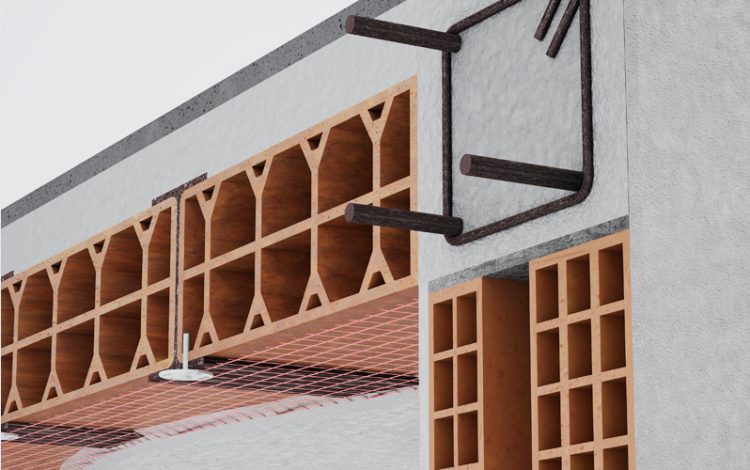
The flexural reinforcement is required for structural elements subject to a bending moment of the project, larger than the corresponding resistance. In the inflexed elements of reinforced concrete structures, the FRP strengthening allows to obtain significant increases in flexural strength, without increasing the stiffness and weight of the reinforced element. The flexure strengthening with composite materials can be performed by applying one or more blades, or one or more layers of tissue, to the tense flap of the element you have to reinforce; it can be done either through pultruded FRP plates or through unidirectional tissue impregnated on site and It should be arranged in the same direction as the pre-existing armatures. The reinforcement in question allows a lowering of the neutral axis of the reinforced element, as a result of the armature increase at a distance from it even larger than the existing one. This increases the area of compression resistant cls and a reduction of tensions in the tense area. Improving the resistance of the element is directly proportional to the elastic modulus of reinforcement, so it is preferable, in this case, to use fibres with high value of elastic modulus. The cutting strengthening in reinforced concrete beams is achieved through the placement, in sections where the stressing cut value is higher than the resistant one, of FRP unidirectional tissues put at 45/90 ° from the axis of the beam. The winding of the fabrics for cutting reinforcement may be conducted according to the indications of the project in full winding or on three sides of the beam.
Advantages:
- Last resistance increase
- No extra weight
- Intervention speed
- Absence of oxidation phenomena
- Better structure durability
- Stiffness increase
- Easiness in modelling materials
Scritto il: 22 September 2011. Categorie: Types and benefits.
Masonry reinforcement
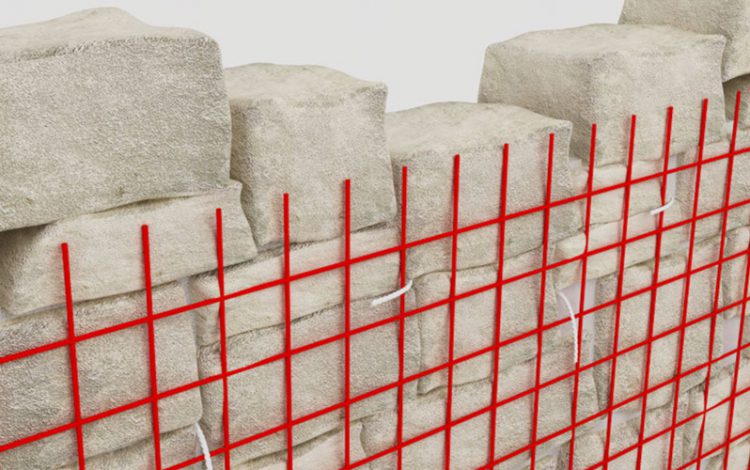
In the field of the planning practice there is often the necessity to provide the masonry panels of pre-existing structures with mechanical characteristics not originally present in the same. Masonry panels can be reinforced with FRP, in order to obtain an increase in compression, cut (o shear) and flexion resistance, inside and outside the plain. Unlike the traditional reinforcement with arc-welded net, the durability of intervention increases a lot because of the absence of oxidation phenomenon, and the traditional reinforced concrete counter-walls are not created. These last ones cause great increase in local and foundation weight of the structure and also an increase in panel rigidity, with a probable cut breakage of the same. Another notable advantage of the masonry reinforcements with FRP is their presence on a surface not exceeding 50% of the total amount, thus allowing a sufficient breathability of the masonries. The arrangement of the reinforcements on the masonries depends on the mechanical characteristics you want to improve; for example, it can be arranged in vertical direction in the case of a reinforcement at +/-45° for the cut or at +/-90°. The strengthening can beachieved on one side of the masonry or on both sides, linking them by using FRP strands, which pass into the masonry and which are linked to both the sides of the reinforcement.
Advantages:
- Breathability of reinforced masonry
- Greater ductility
- Facility in modeling materials
- Rapid intervention
- A larger durability of structure
- No weight burden
- Lack of oxidation phenomenon
Scritto il: 22 September 2011. Categorie: Types and benefits.
Reinforcement of concrete pillars
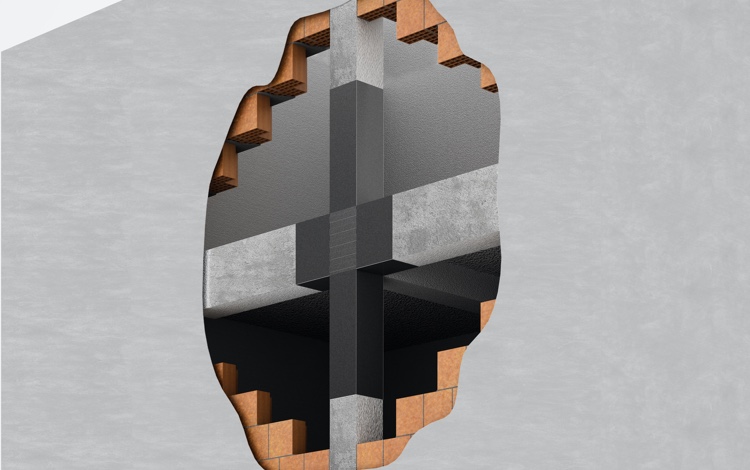
A suitable reinforcement of concrete pillars may lead to improve the performance of the structural element. The pilaster consolidation is executed in case of an increase in the normal effort or in presence of damaged reinforcing bars. Particularly, it allows to increase the ultimate resistance, the ductility and the corresponding ultimate deformation for elements pressed by a normal centered effort or with a little eccentricity; it permits also, together with the use of longitudinal reinforcements, the increase of the last resistance for inflexible pressed members. The confinement of reinforced concrete elements can be realized with the use of FRP wraps arranged on the contour, so as to form a continuous or discontinuous external wrapping. The increase in pressure resistance and its ultimate deformation of mass concrete confined with FRP, depend on the applied confinement pressure, which is function of the system stiffness and the transversal section form of the element you have to confine. A system confined by FRP (elastic till its breakage), unlike a steel system (elastic-plastic), practises a more and more increasing lateral pressure, according to the increase in the transversal dilatation of the confined element. This kind of reinforcement permits to obtain an increase in the last resistance of the compressed element without raising its section, as in the traditional interventions with reinforced concrete. I this way, you can avoid variations in the hierarchy of resistances, which, in the traditional interventions, due to the rigidity increase of the reinforced element, can lead to fragile breakage, such as the cutting (o shear) breakage, instead of the traditional ductile fracture, which continues being present in the pilasters reinforced with FRP.
Advantages:
A larger durability of structure
No oxidation
No weight burden
Facility in modeling materials
Rapid intervention
Scritto il: 22 September 2011. Categorie: Types and benefits.
Strengthening of masonry arches and vaults
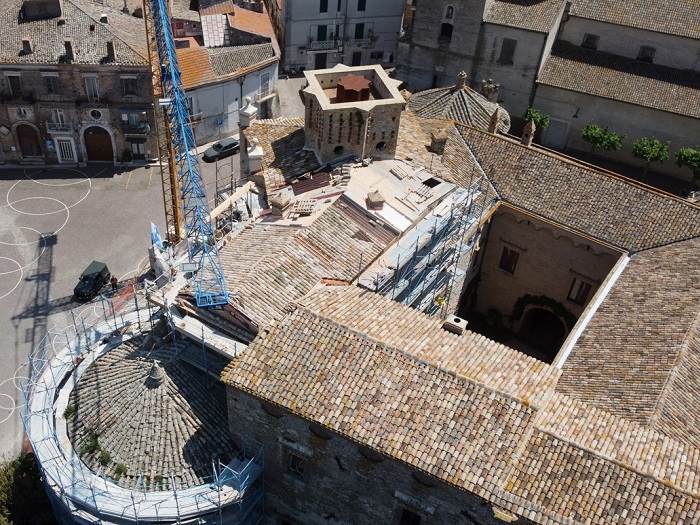
The strengthening of masonry arches and vaults is one of the most functional intervention in reinforcements with FRP. This reinforcement intervention can be carried out both in intradossal and extradossal zone, and in both cases it permits the deletion of the probable opening of hinge families either at the intrados or extrados, respectively. In this way, it is impossible the hypostatic condition of the reinforced structure, which can only change its condition of equilibrium from a hyperstatic condition to an isostatic one. In case of intradossal interventions, the reinforcement should be connected to the masonry with anchoring systems, such as FRP strands inserted in the walls and linked to the reinforcement. The positioning of the FRP bands on the vaults which have to be reinforced, depends on the vault geometry itself; in fact it changes a lot depending on whether it is a barrel-vault, a cross vault… The stability of a vaulted structure is guaranteed when the curve of pressures, that is the funicular polygon of the permanent and accidental load burdening on it, passes into the central inertial core of each “static channel” section. Instead, if the pressure curve came out from the above-mentioned static channel, as a result, for example, of changed load conditions, the section would be reduced, causing consequent traction tensions. If the pressure curve, already external to the core lines, came out even from the intradossal and extradossal lines, i.e. from the borders of the arch itself, the crisis caused by the formation of a hinge would occur. The presence of FRP prevents the formation of these hinges, and so the structure collapse, too, by absorbing the present traction efforts.
Advantages:
A larger durability of structure
No oxidation
No weight burden
Facility in modeling materials
Rapid intervention
Scritto il: 22 September 2011. Categorie: Types and benefits.